General Description
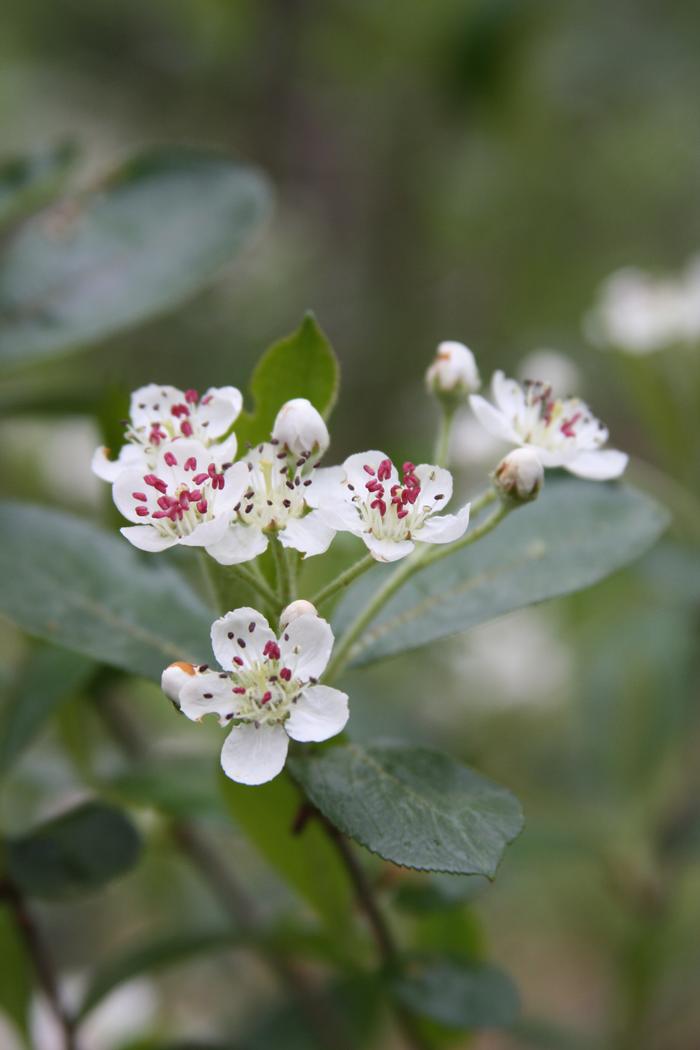
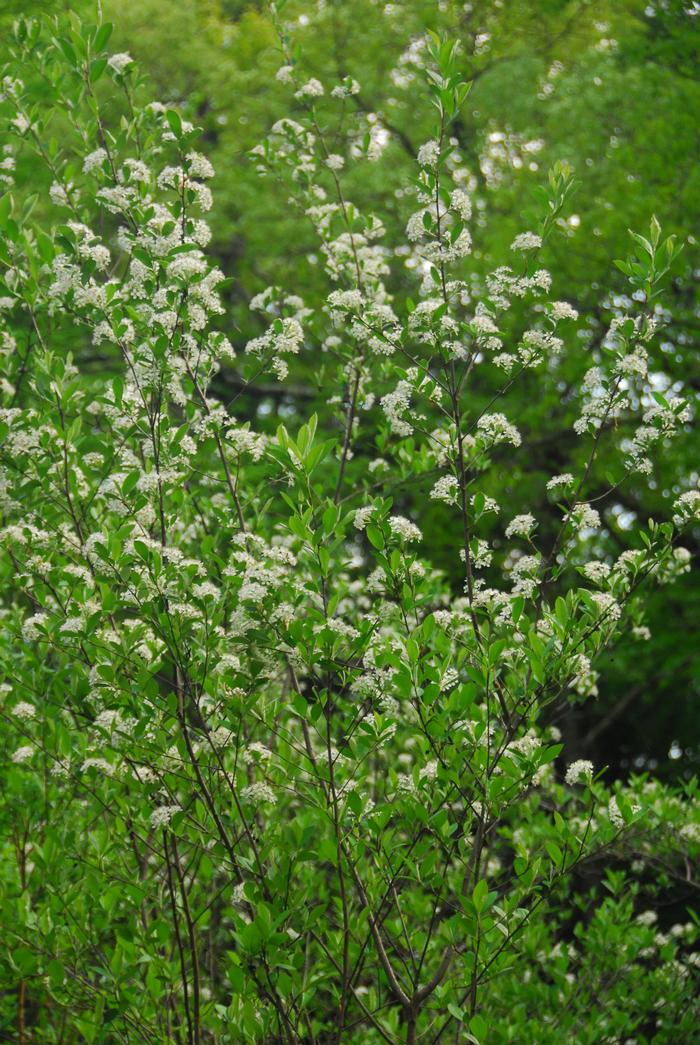
Bloom Description: Flowers appear in late May to early June and are small and white with deep red to maroon anthers. The flowers appear in masses making a spectacular show.
Growth Habit & Shape: A multi-stemmed shrub with small dark twigs and exfoliating bark. Aronia can spread by root suckers, forming colonies of plants.
Soil Preferences: Thrives in wetlands or occasionally flooded areas, but is nicely adaptable to average garden soil.
Root Description: Aronia has a fibrous root system and spreads by suckers, forming colonies.
Garden Uses: This is a wonderful shrub for a wildlife border. The flowering and fruiting characterisitics make it a nice specimen, and its growth habit lends itself well to filling gaps in shrub borders.
Best Management & Maintenance: Red chokeberry sometimes gets leggy, and can be pruned by cutting it to the ground periodically and allowing fresh growth to come up from the base. The best pruning method is to remove 1/3 of the largest branches over a 3 year period to keep the plant robust. In a hedgerow, the plant needs little attention. Plant in a sunny spot for best ornamental value.
Common Problems: Biotic: no serious disease or pest problems, but the plant may get leaf spot or fruit and twig blight if excessively stressed.
Benefits
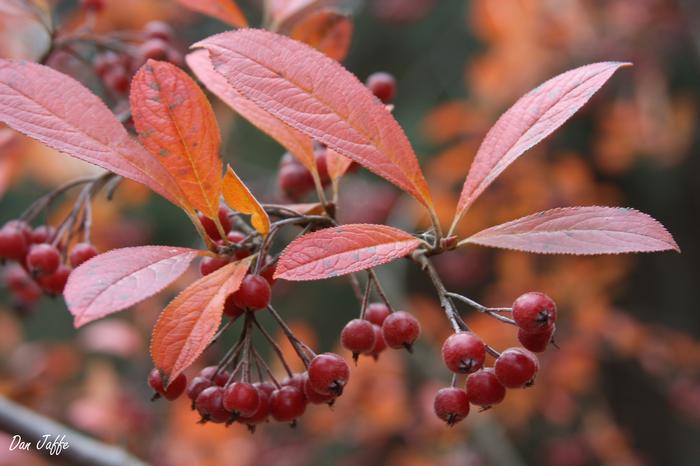
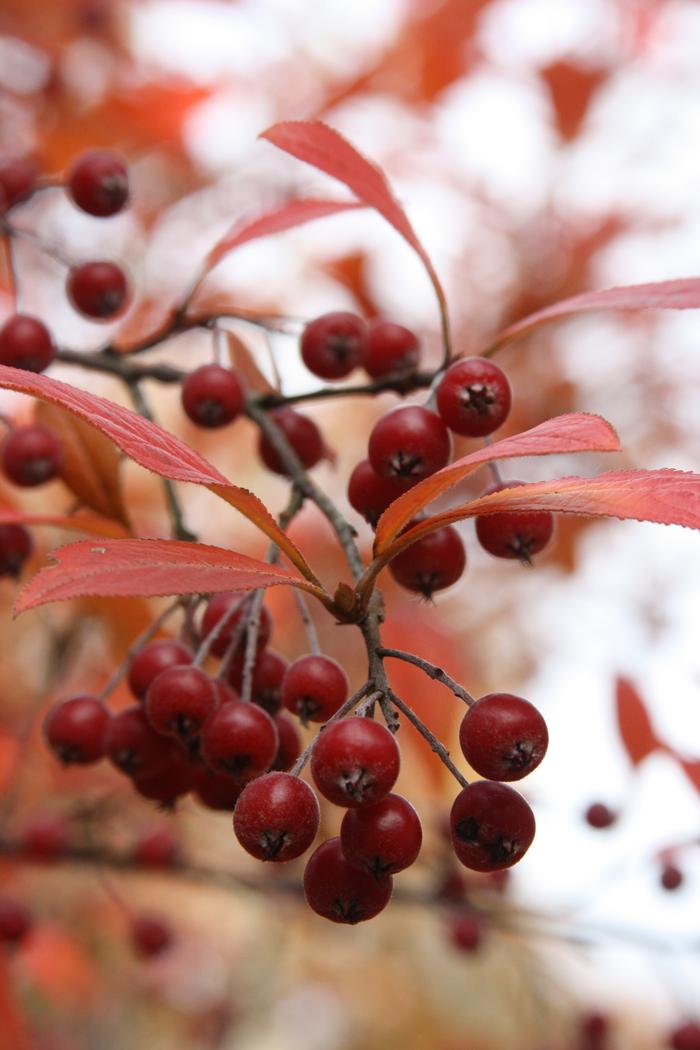
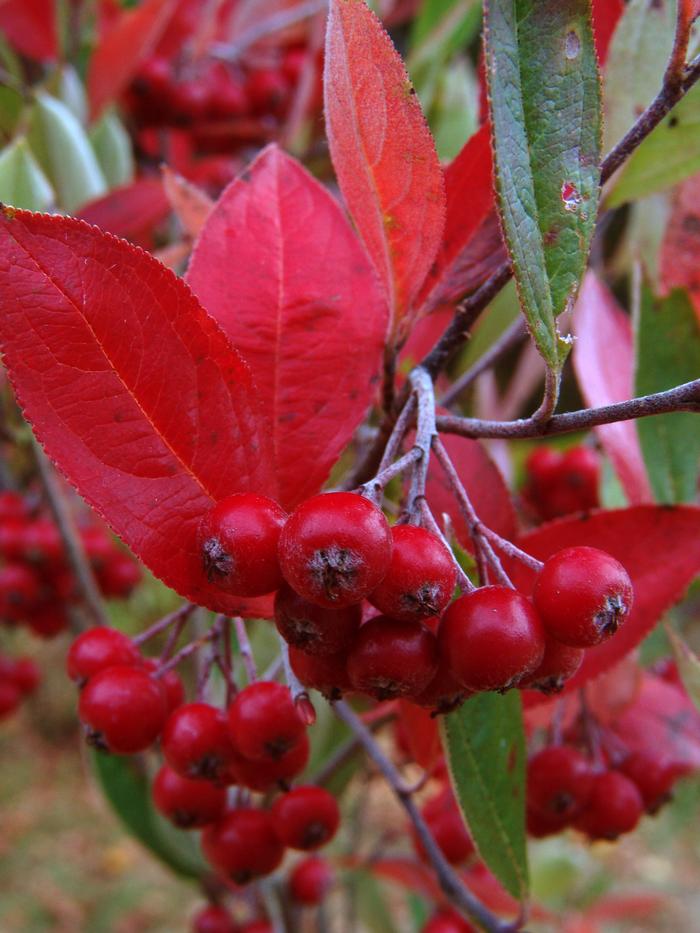
Ornamental Value: The flowers are small but beautiful in mass, and the fruits are visually exquisite and attract birds in winter. The fall foliage is a brilliant red that rivals Euonymus alatus.
Wildlife Benefits: Flowers are visited by numerous pollinators, and berries provide food for birds and mammals in late winter. Protect from deer browse!
Other Practical/Environmental Benefits: Bank and soil stabilization, erosion control
Use in place of: Berberis thunbergii, Euonymus alatus
Ecology
Habitat:
Swamps, wet thickets, peatland pocosins, bogs, fens, wet pine flatwoods, margins of freshwater wetlands
Response to Disturbance: This suckering shrub can regrow after being entirely cut back, and will also endure occasional periods of drought.
Native State Distributions:
Canada: N.B., N.S., Ont., P.E.I., Que.
USA: AL, AR, CT, DE, D.C., FL, GA, KY, LA, ME, MD, MA, MI, MS, NH, NJ, NY, NC, OH, OK, PA, RI, SC, TN, TX, VA, WV.
Wetland indicator status: FACW
References
Return to Top